
Innovation without compromise: Interview with ELLE
This is English version of the original ELLE Lithuania publication, March number.
TEXT BY GRETA KUKSAITE
PHOTOGRAPHY BY EVELINA DEVEIKAITE
How do plant-based materials such as flax-origin fur or olive-based leather differ from conventional textiles, and what challenges arise when working with them?
The expanding spectrum of plant-based materials, from banana, cactus, and apple to the materials we have selected, reflects a broader shift within the fashion industry. The primary challenge, however, lies in adapting these materials for real-world wear.
Technologically, they differ from conventional textiles, and due to their still limited scale of use, their full potential continues to evolve. For instance, flax-origin fur is heavier than synthetic or animal-based fur, which directly impacts design decisions -from construction to the level of detailing, in order to maintain comfort. Care and maintenance are also key considerations, often requiring in-house testing. As a result, we work closely with material developers, continuously sharing feedback on technical nuances.
How are flax-origin fur and olive-based leather developed — from laboratory to final material?
“Balsais” works with Savian by BioFluff, the world’s first 100% plant-based fur, made from European nettle, flax, and hemp fibres. These fibres are preserved in their natural botanical form rather than spun into yarn, dyed using water-based dyes, and processed without additional chemical treatments. To achieve a soft, voluminous texture, they undergo technical softening and finishing processes. Production takes place in Italy, within family-owned manufacturing facilities.
The olive-based leather alternative is developed by repurposing waste from the olive oil industry. After oil extraction, the material is separated: the liquid fraction is converted into bio-based chemical intermediates, while the solid residue is cleaned, dried, and refined into particles that are later integrated into material formulations. In laboratory stages, coating systems are engineered to provide flexibility, abrasion resistance, and strong adhesion to textile backings. The material is then tested to meet the performance standards required by the fashion industry.

What is the actual environmental impact of these alternative materials?
Unlike animal-based leather or fur, olive-based materials are produced without livestock processes, resulting in lower land and water use, as well as reduced methane emissions. Compared to conventional leather or petroleum-based alternatives, they can reduce greenhouse gas emissions by more than 80%, while plant-based fur may achieve reductions of up to 95%.
In addition, they utilise agricultural waste, contributing to a more circular system and reducing dependence on fossil resources. They also avoid chrome tanning — one of the most environmentally harmful stages in traditional leather production. Plant-based fur made from natural fibres can, under the right conditions, biodegrade.
Do plant-based textile innovations rely more on traditional craftsmanship or biotechnology?
Plant-based textile innovations are developed at the intersection of biotechnology, materials science, and advanced manufacturing. While some solutions build on traditional processing of plant fibres, most next-generation materials are created using advanced technologies.
They can be derived from natural fibres such as flax or hemp, or from agricultural by-products, where biomass is transformed into biopolymers and other functional components. This creates a hybrid field in which traditional knowledge is combined with innovation to develop alternatives to conventional materials.

At which stage - raw materials, production, or consumption - does the textile industry have the greatest environmental impact? And are consumers today willing to pay more for sustainable products?
All stages are important, but ultimately, the greatest impact lies with the consumer. Changes in raw materials and production tend to happen gradually, while purchasing decisions are still largely driven by price and quality. While sustainability is not yet the primary criterion for many, we are seeing a growing interest not only in the materials themselves, but also in how they are developed and produced. At the same time, higher price points remain a barrier, and the field is still relatively niche.
Can plant-based textiles offer new aesthetic qualities, and do they change the design process? How are designers responding?
The design process itself does not fundamentally change – it still begins with the visualisation of a product or collection. However, when working with plant-based leather or fur, it is essential to consider the technical properties of the material to ensure that the final piece is not only aesthetic, but also truly wearable.
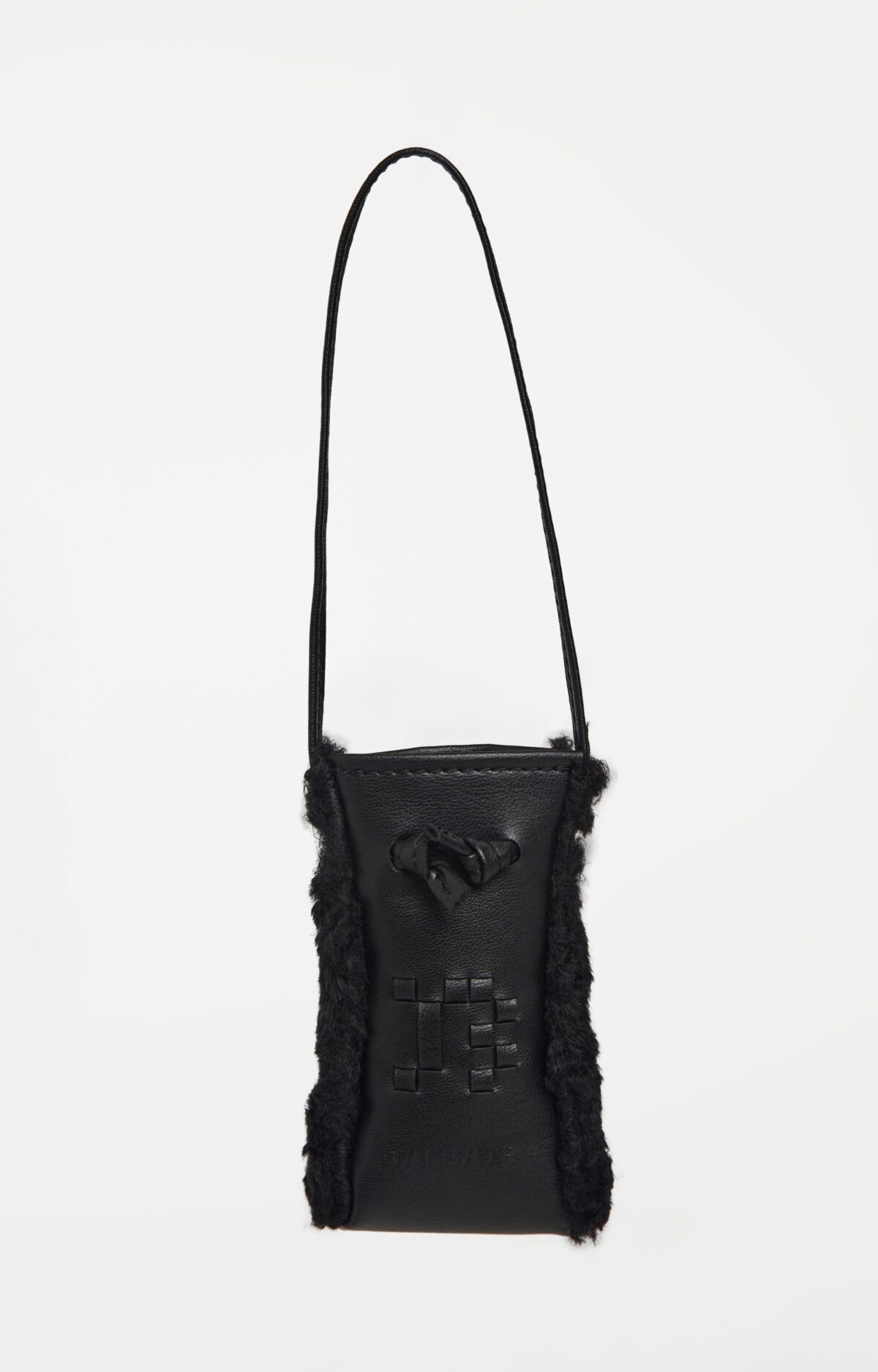
While there is a wide range of plant-based leather alternatives – from banana, apple, or grain-derived materials, however heir thickness often limits their use to accessories or footwear. The plant-based fur we work with is relatively lightweight, which allows us, together with designers, to explore both structural and aesthetic solutions so that the final garment can be perceived as a classic fur piece. Plant-based materials are increasingly used across fashion – not only for primary fabrics, but also for fillings, linings, and trims such as buttons, beads, or sequins, traditionally made from plastic. In our pieces, we use buttons produced in Lithuania from natural shells or food industry by-products. We are also pleased to collaborate with the Lithuanian manufacturer FM Buttons, incorporating their developed components into our designs.


What are the wearing properties of plant-based garments?
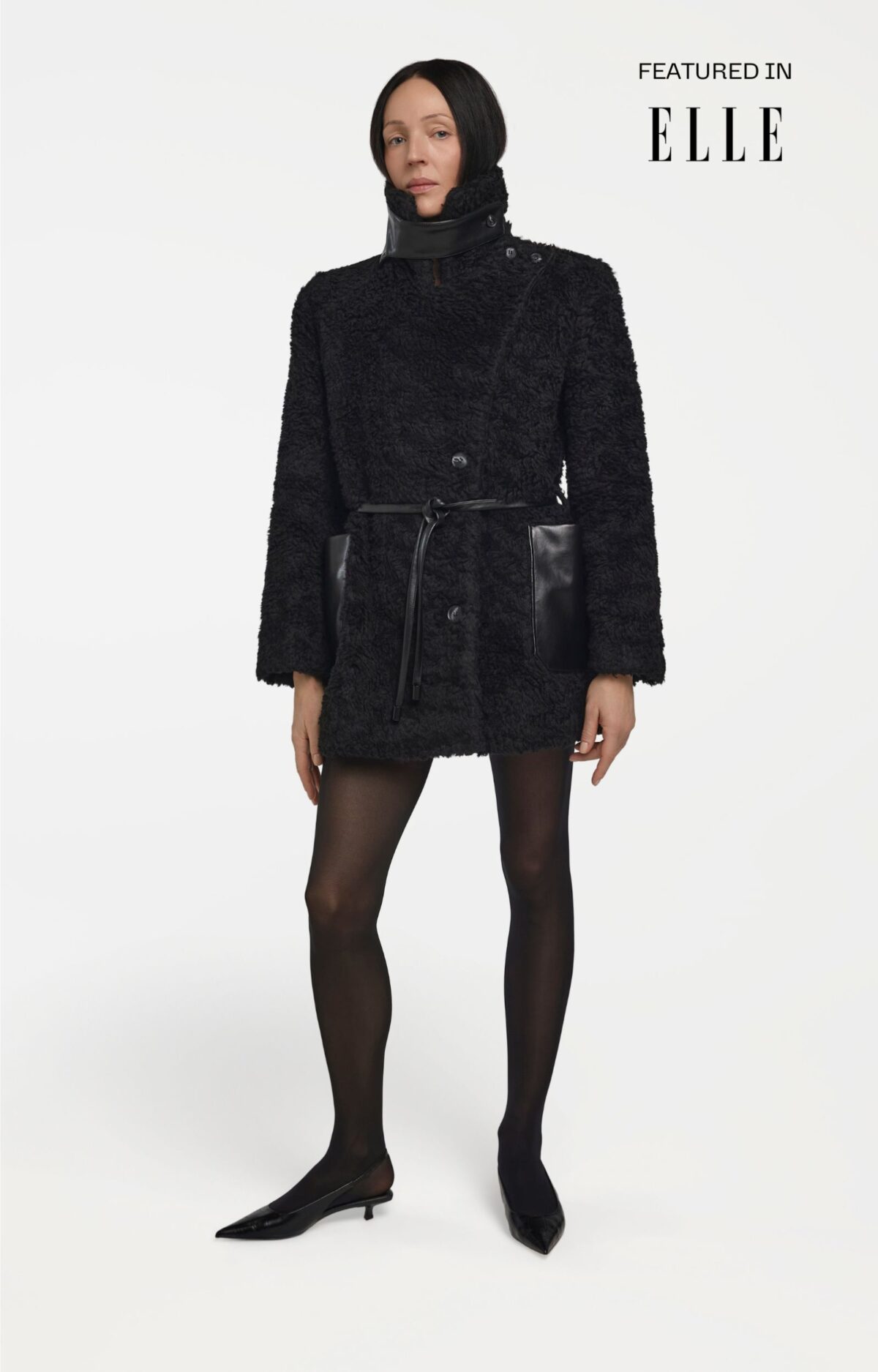
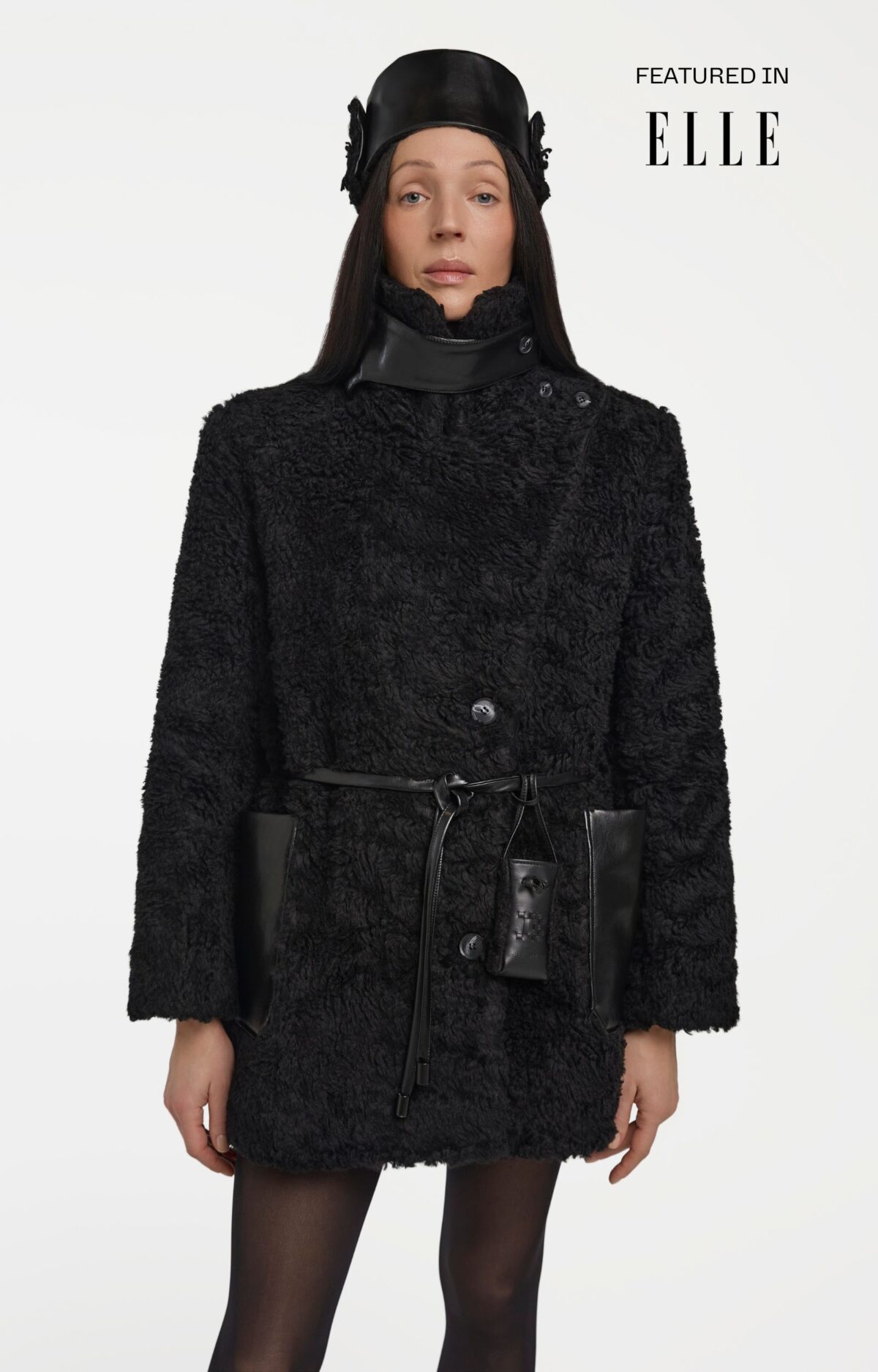
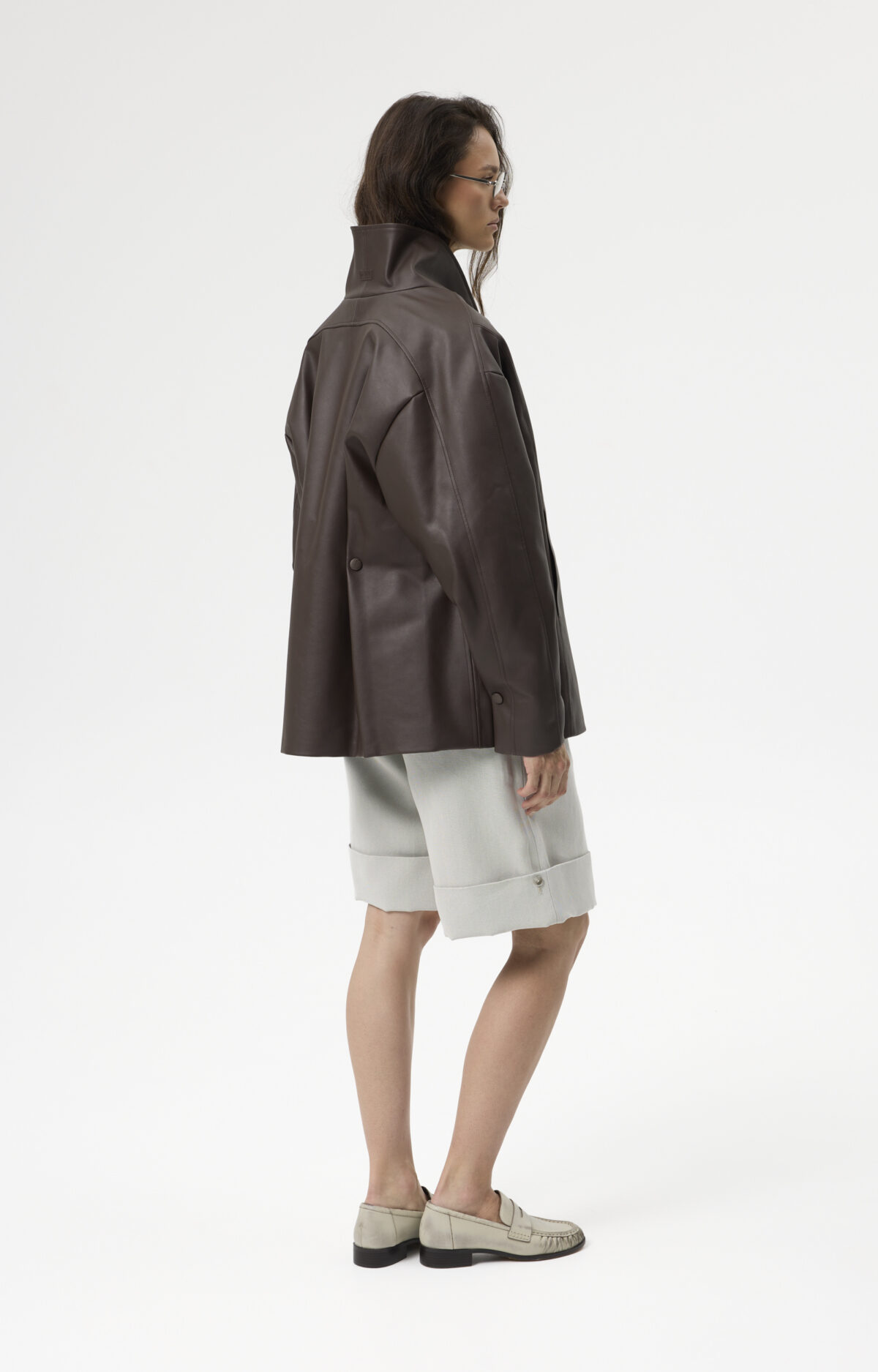
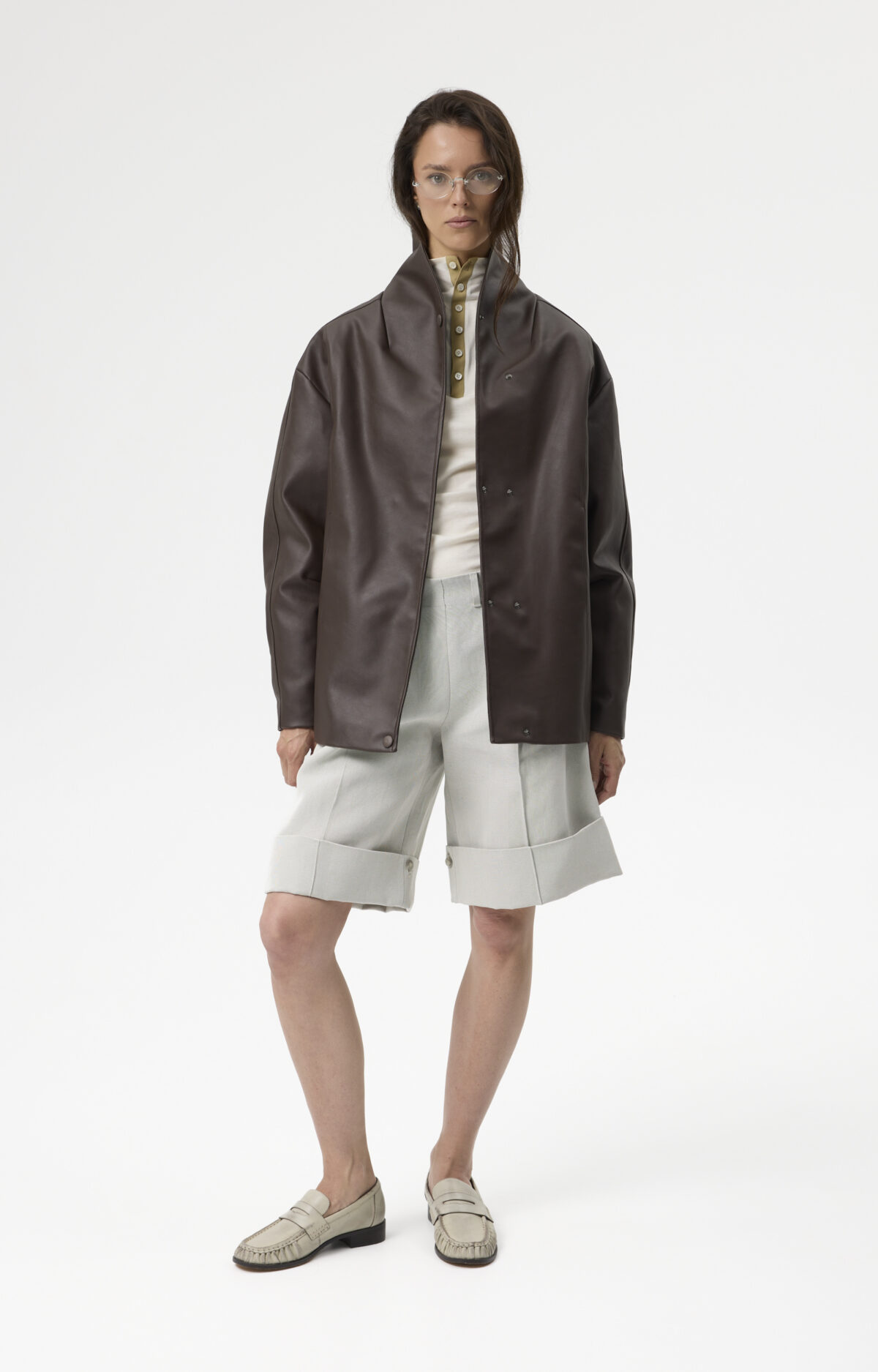
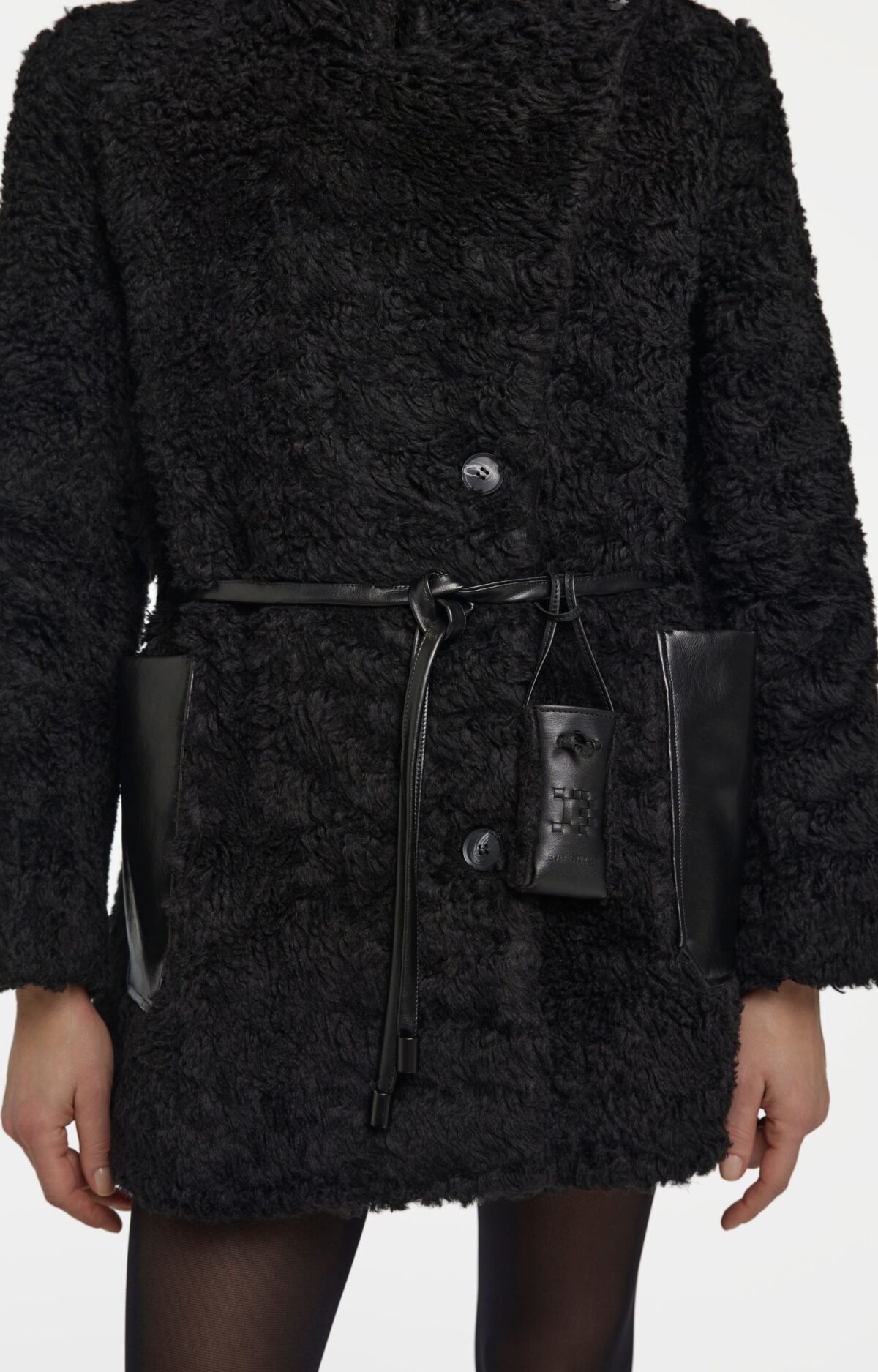
Plant-based leather is slightly more structured than soft animal leather, but the difference is not significant — it remains pleasant to the touch and comfortable to wear. Due to its structure, it requires slightly different construction techniques compared to traditional leather. Plant-based fur differs structurally from animal fur — it is thinner, shorter, and softer, often highlighting its natural texture. This can be seen in “Balsais” pieces, such as the Pecora coat, where soft curls become the defining design element.
What has surprised you the most while working in this field?
The interplay between creativity and science. Many of these materials have emerged from rethinking existing resources and their potential. For example, through bacterial fermentation, sugars derived from fruit waste can be transformed into a substance comparable to animal leather. This highlights the unexpected possibilities opened up by science and technology — not only in developing new materials, but also in meaningfully repurposing existing resources while reducing the environmental impact of the fashion industry.